


 LIPOELASTIC TEAM
 After breast surgery, whether augmentation, reduction, or lift, your body needs time, rest, and the right support to heal. And that starts with choosing a high-quality, medical-grade post-operative bra.
.png)
The right bra after surgery isn’t just about comfort - it’s an essential part of your recovery. A specialist post-surgical compression bra helps minimise movement, supports the healing tissue, and in the case of implants, keeps them in the correct position.
But not all bras marketed as "post-surgical" meet the standards required to support your healing process. In fact, some patients are unknowingly choosing poor-quality garments from unregulated websites or marketplaces. Let’s take a closer look at the 8 most common mistakes patients make - and how to avoid them.
(2).png)
1. Choosing a Regular Bra Instead of a Medical-Grade Garment
One of the most common misconceptions is that any firm or supportive bra will do after surgery, but unfortunately, this isn’t the case. Regular bras are not designed with targeted compression or medical recovery in mind. Some may even apply pressure in the wrong places or lack proper support.
What to do instead:
Choose a post-operative bra that is classified as a medical device, ideally one recommended by your surgeon. Look for clear product labelling, manufacturer credentials, and ideally, CE certification for use in the UK.
Want help identifying the right post-operative bra for your surgery type? Here’s a detailed guide on choosing your compression bra.
2. Opting for a Bra Without Front Fastening
In the days and weeks following breast surgery, raising your arms above your head can be painful and even risky. Pulling a bra on overhead or twisting to fasten it at the back can be unnecessarily uncomfortable.
What to do instead:
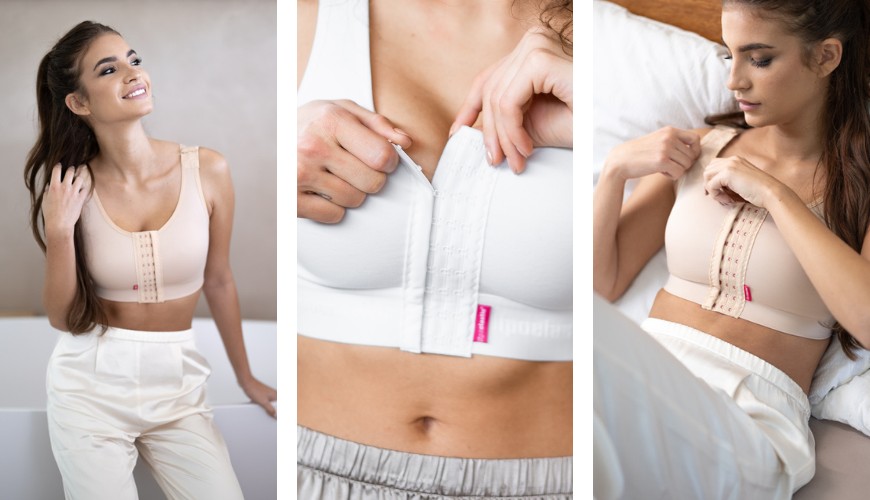
Look for a front-fastening surgical bra. This small design feature can make a big difference - not only making it easier to dress but also reducing unnecessary strain during recovery and follow-up checks.
3. Picking a Bra with Narrow Shoulder Straps
Narrow straps might look more discreet, but they can dig into your shoulders, especially when your chest is swollen and sensitive. This discomfort can quickly become a daily irritation.
What to do instead:
Choose a post-surgery bra with wide, soft, adjustable straps that distribute weight evenly. Wider straps help prevent digging and rubbing and offer better support - especially important if you’ve had implants or a lift.
4. Overlooking the Cup Design and Seam Placement
Surgical areas are often tender and swollen in the early stages of healing. Rigid seams, bulky stitching, or poorly placed cup shapes can irritate the skin or press against scar lines.
What to do instead:
Go for seamless or gently contoured cups designed specifically for post-op recovery. These adapt to swelling and reduce the risk of friction. A great example is the PI perfect bra from LIPOELASTIC, which features seamless edges for optimal comfort.
5. Ignoring Fabric Composition
Not all fabrics are skin-friendly - especially post-surgery. Some cheap synthetic blends can cause sweating, irritation, or even rashes, particularly when worn for 24/7 wear.
What to do instead:
Look for breathable, hypoallergenic materials. If you have sensitive skin, choose bras with a higher cotton content - like PI special, which contains high percentage of cotton for a soft, natural feel. Moisture-wicking fabrics can also help prevent heat build-up and irritation.
6. Not Checking Safety Certifications
When a bra will be worn against healing tissue for weeks - possibly months, it's vital to ensure that the materials are safe and the garment has been tested to appropriate standards.
What to do instead:
Choose products that meet recognised textile safety standards such as OEKO-TEX® STANDARD 100. Even better, ensure the bra is classified as a Class I medical device, clearly labelled by the manufacturer.
7. Underestimating the Small Details That Make a Big Difference
When you're wearing a post-operative bra day and night for 6–8 weeks, even the smallest discomfort can become a real nuisance. Think scratchy labels, rolled hems, or metal fastenings that press into the skin.
What to do instead:
Look for bras with flat seams, soft finishes, and smart details like external labels or hemming technology, which ensures the bra lies flat and doesn’t roll. LIPOELASTIC’s PI elite is an excellent example - designed with extra-soft materials for sensitive post-op skin.
8. Only Buying One Bra
It might seem economical to buy just one post-surgical bra - until it’s in the wash. Wearing compression garments continuously is often part of your surgeon’s protocol, and maintaining hygiene is crucial.
What to do instead:
We recommend at least two bras, ideally three, so you can rotate between wears and always have a clean one ready. It’s a small investment in a smoother, more comfortable recovery.
Choose Trusted Medical-Grade Post-Surgical Bras
When it comes to healing after breast surgery, your bra is more than just underwear - it's a part of your care plan. Avoid the pitfalls of poorly made alternatives and invest in garments developed with recovery in mind.
Explore the LIPOELASTIC® range trusted by professionals across the UK:
- PI special – High cotton content for sensitive skin
- PI perfect – Seamless design for daily comfort
- PI elite – Ultra-soft and lightweight
Curious about what to wear once your initial recovery phase is over? Learn more about transitional bras and their role in ongoing support.
.png)
.png)
.png)
.jpg)
♡ Recommended reads for your recovery journey
-
Top 5 Concerns Patients Have Before Breast Surgery – Answered by a UK Plastic Surgeon - Expert answers to the questions patients ask most before surgery.
-
Understanding Breast Reconstruction Recovery: Why the Right Support Matters - What to expect after breast reconstruction and why support garments matter.
-
Post-Operative Breast Care: Tips for Faster Healing - Simple aftercare tips to support healing and comfort.
-
How Soon After Breast Augmentation Can You Start Exercise? - A clear guide to returning to movement safely.





 England



 Wales
Wales
 Scotland
 Northern Ireland
 Isle of Man
